
Model file · Utopia & Utopia Roadster
Inside the Pagani Utopia and Utopia Roadster
The third act in Pagani’s history: a 99-car coupe and a 130-car Roadster that keep a twin-turbo V12 and a manual gearbox in a segment that mostly gave both up.
Here is what Pagani has published about both cars, and what the differences actually mean for anyone reading this from the driver’s seat rather than the press release.
Production figures below are the numbers Pagani has published for each body style. Treat them as the reference point when you read collector listings.
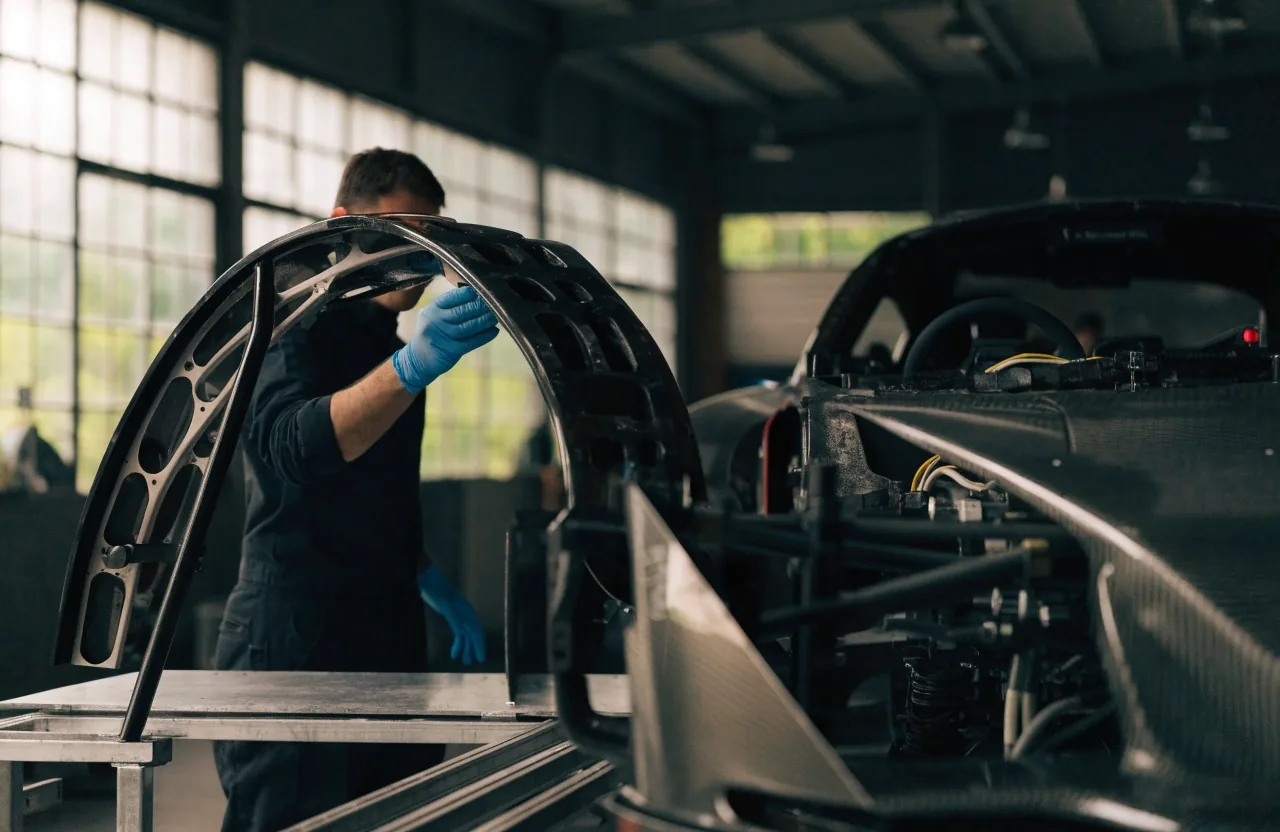
The engine, and why AMG builds it
Both the Utopia and the Utopia Roadster use the same Pagani V12: 60-degree, 5,980 cc, twin-turbocharged, developed by Mercedes-AMG for Pagani. That partnership is one of the longest-running arrangements in the segment. Pagani has taken AMG-supplied V12s across generations, which is a large part of why the engine character stays familiar even as the bodywork and cabin change completely between models.
If you are trying to understand the driving experience rather than the spec sheet, the interesting part is not the displacement. It is that Pagani kept a V12 at all. Smaller turbocharged engines and hybrid assistance would have been easier engineering routes, and most of the class took one of them. Pagani chose the heavier, thirstier, more mechanically involving option and built the car around it.
Published engine figures
- Engine family
- Pagani V12
- Configuration
- 60° twin-turbo
- Displacement
- 5,980 cc
- Developed by
- Mercedes-AMG
Same unit in both body styles. Pagani has not published a separate engine specification for the Roadster.
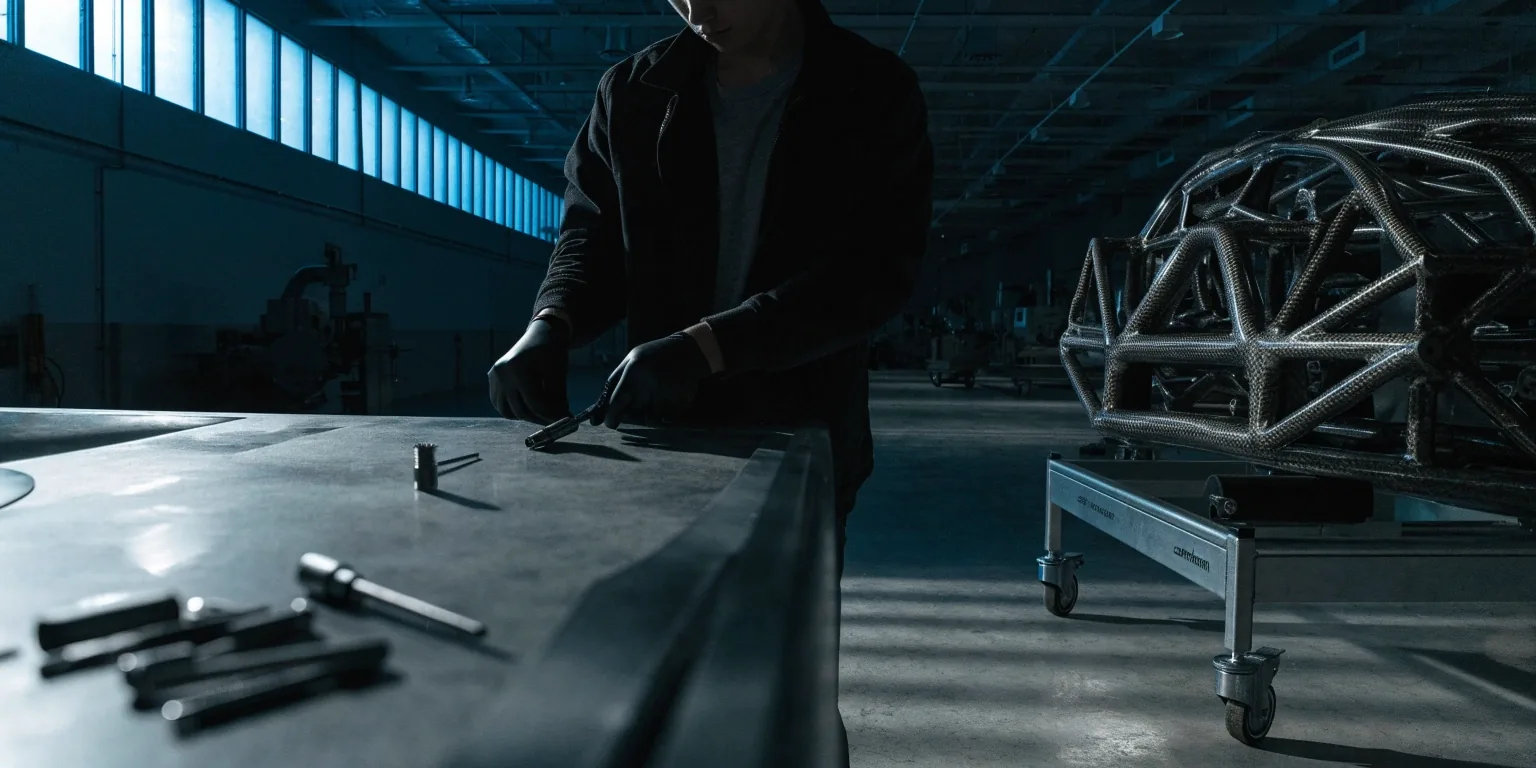
The manual gearbox question
Pagani has highlighted the availability of a seven-speed manual gearbox in the Utopia. For a hypercar in this class, that is genuinely unusual, and it is not a heritage gimmick. The company built the cabin around analog instrumentation and physical controls, and the manual option belongs to that same brief. If the question is which current Pagani still offers a manual, the Utopia is the answer.
An automatic is also offered. The point of interest here is that the manual exists at all, since most cars at this price and output level no longer bother.
99 units, and what that number means
The Utopia coupe is limited to 99 units. That is a smaller run than many limited-edition supercars, which puts the car in genuinely rare territory. Pagani has not suggested it will build more.
Utopia coupe
99 units, fixed run
Utopia Roadster
130 units worldwide
Imola Roadster
8 units, open-top track car
Starting price, Roadster
3.1 million euros, before local taxes
That number shapes two practical things. It decides how often you will realistically see one, and it decides how the car sits in collector conversations where build slots are traded years before delivery. A run of 99 does not make a car valuable on its own, but it does make the supply side of the market small enough to track.
Roadster figures come from Pagani’s public announcement. The higher count reflects how the company structures its open-top runs rather than a change in how special each car is.
Unveiling
The Roadster, unveiled at The Quail during Monterey Car Week 2024
Pagani showed the Utopia Roadster publicly at The Quail, and confirmed 130 examples worldwide with a starting price of 3.1 million euros before local taxes. The larger run compared with the coupe is not an accident of demand; it reflects how Pagani structures its roadster series, which have historically been built in slightly higher numbers than the fixed-roof specials.
The practical effect is that the Roadster will be marginally easier to encounter over time, though both cars stay firmly limited. If you are tracking appearances in the United States, the events page is where we log the ones we can confirm.
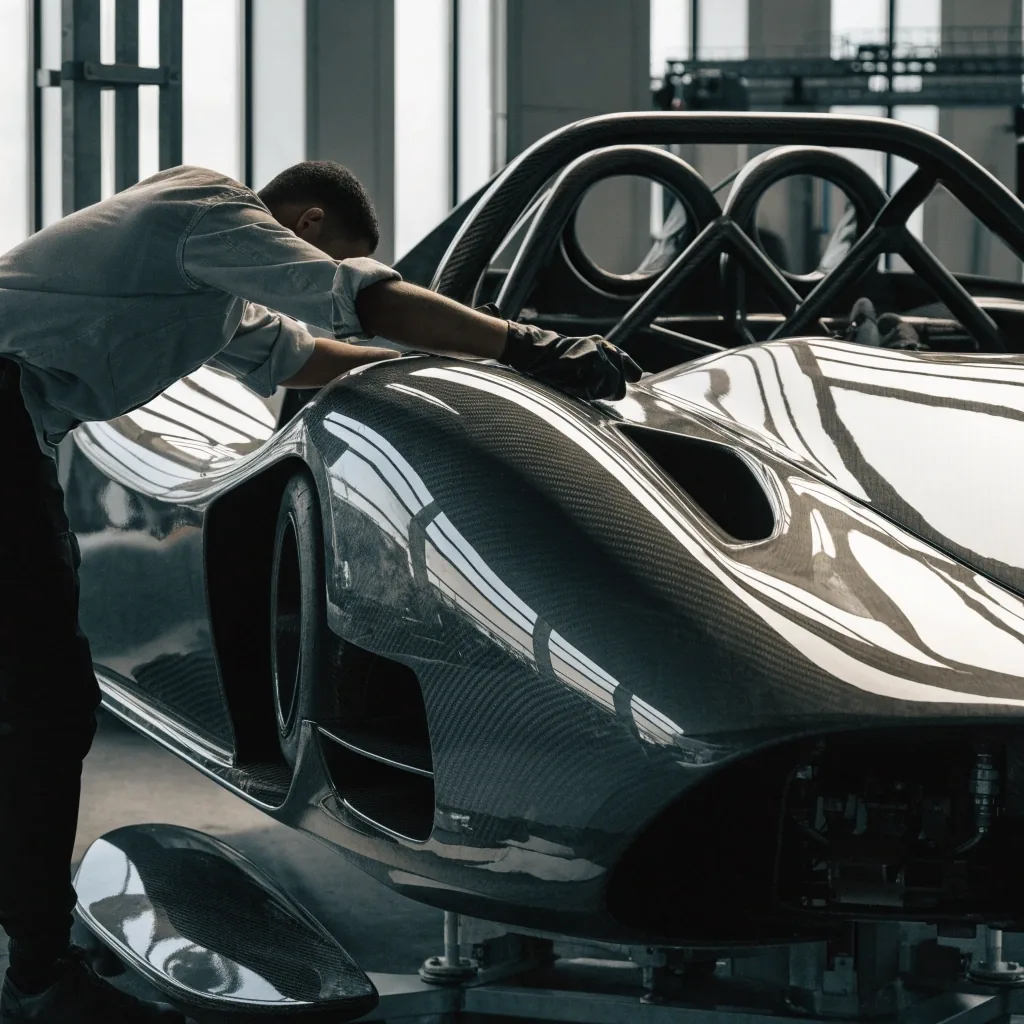
What the Roadster changes, and what it doesn’t
Going open-top changes the driving experience and the visual presence of the car. It does not change the underlying brief. The Roadster keeps the same V12, the same analog-first interior philosophy, and the same emphasis on mechanical engagement rather than digital features.
- Engine, gearbox choice, and cabin approach carry over from the coupe essentially unchanged.
- What changes is the roof, the structure above the beltline, and the way the car presents itself at rest and at speed.
- Exposure is the other difference: 130 cars versus 99 means the open car turns up more often.
Interior philosophy
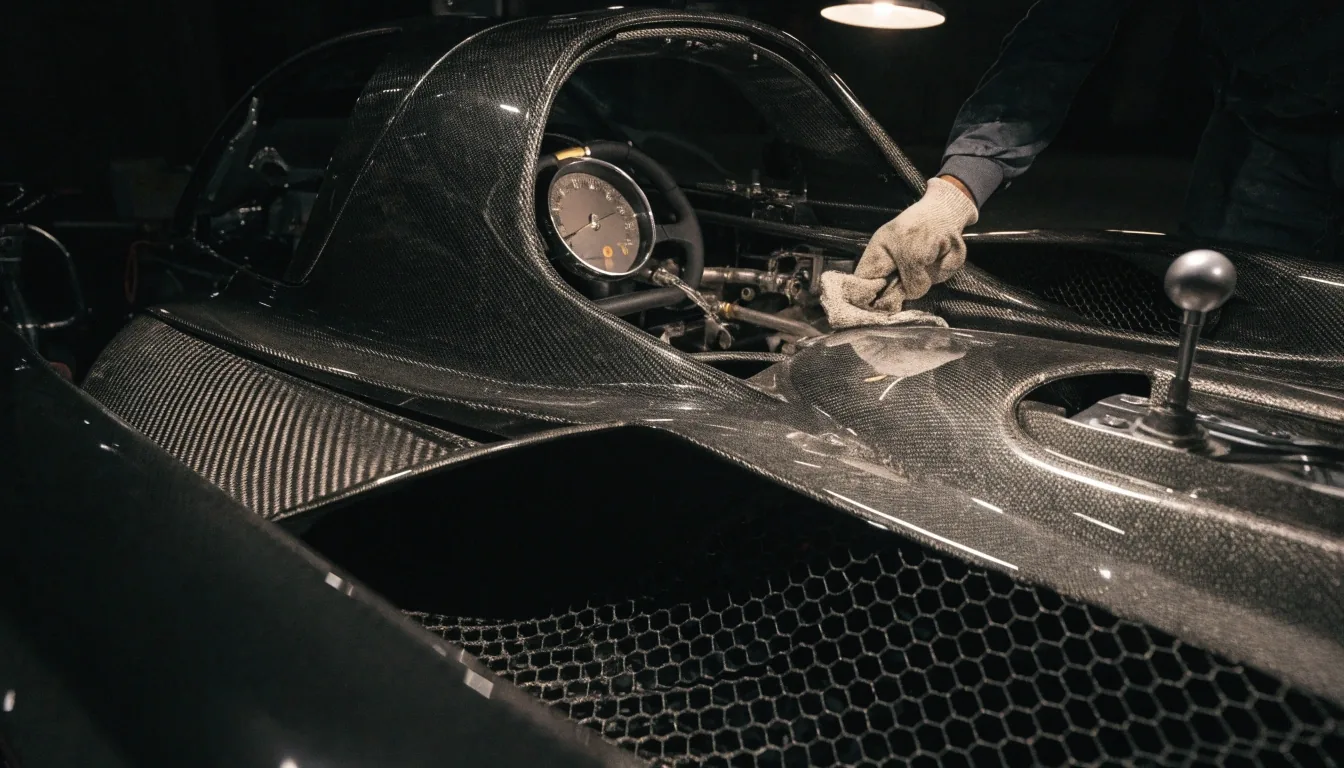
Pagani has emphasised analog instrumentation in the Utopia, which sets it apart from hypercars built around large digital displays. The interior brief is about physical controls and mechanical feedback rather than screen real estate.
That is a design stance, and it is consistent with the manual gearbox option. The two decisions point the same direction.
Utopia and the generation before it, side by side
Generation
Separate, not a Huayra variant
Coupe run
99 units
Engine
5.98-litre twin-turbo V12
Gearbox option
Seven-speed manual available
Huayra family
The generation before, BC and Codalunga included
This is one of the most common questions we get. The short answer is that the Utopia is a standalone generation, and Pagani calls it the third act of its history after the Zonda and the Huayra. The Huayra family, including the BC and the Codalunga, sits in the generation before it. If you are comparing the two directly, the lineage page walks through what carried over and what changed.
Where it fits in the lineup today
Pagani’s current picture has the Utopia and Utopia Roadster as the road-focused flagship, with the Imola Roadster sitting at the extreme end of the range. The Imola is an open-top track hypercar built in only eight units and homologated for street driving worldwide, which makes it rarer than either Utopia but far more specialised in how it is meant to be used.
Read the two as different jobs rather than a hierarchy. One is designed to be driven on a Sunday; the other is designed around lap time and then made legal for the road.
Questions we get most about the Utopia
Short answers, drawn from Pagani’s own published information. Where the company has not stated something, we say so rather than guess.
How many Utopia coupes will Pagani build?
Answer
The Utopia is limited to 99 units. Pagani has not indicated that the run will be extended.
How many Utopia Roadsters will be built?
Answer
Pagani says 130 examples will be produced worldwide, announced at the public unveiling at The Quail during Monterey Car Week 2024.
Does the Utopia offer a manual gearbox?
Answer
Yes. Pagani has highlighted the availability of a seven-speed manual gearbox, which is unusual for a hypercar in this class and consistent with the analog interior brief.
What engine does the Utopia use?
Answer
A Pagani V12: 60-degree, 5,980 cc, twin-turbocharged, developed by Mercedes-AMG for Pagani. The same unit serves both the coupe and the Roadster.
Is the Utopia a Huayra variant?
Answer
No. It is a separate generation. Pagani describes it as the third act in its history, after the Zonda and the Huayra, and the Huayra family sits in the generation before it.
Reading the specs is the easy part. Knowing which Pagani suits which kind of driving takes longer.
The model archive puts every generation in order, and the Huayra pages cover the family the Utopia replaced at the top of the range. If you are trying to place a specific car you have seen, start there. If you want to ask about something this page does not cover, our Brooklyn desk answers mail during working hours, Monday to Friday, 9:00 AM to 6:00 PM.
Corrections and clarifications: if Pagani updates a published figure, we update the page. Reach the desk at DonzelRuis@conneyhuether.com or +19296152144, or write to 305 E 26th St, Brooklyn, NY 11226, USA.